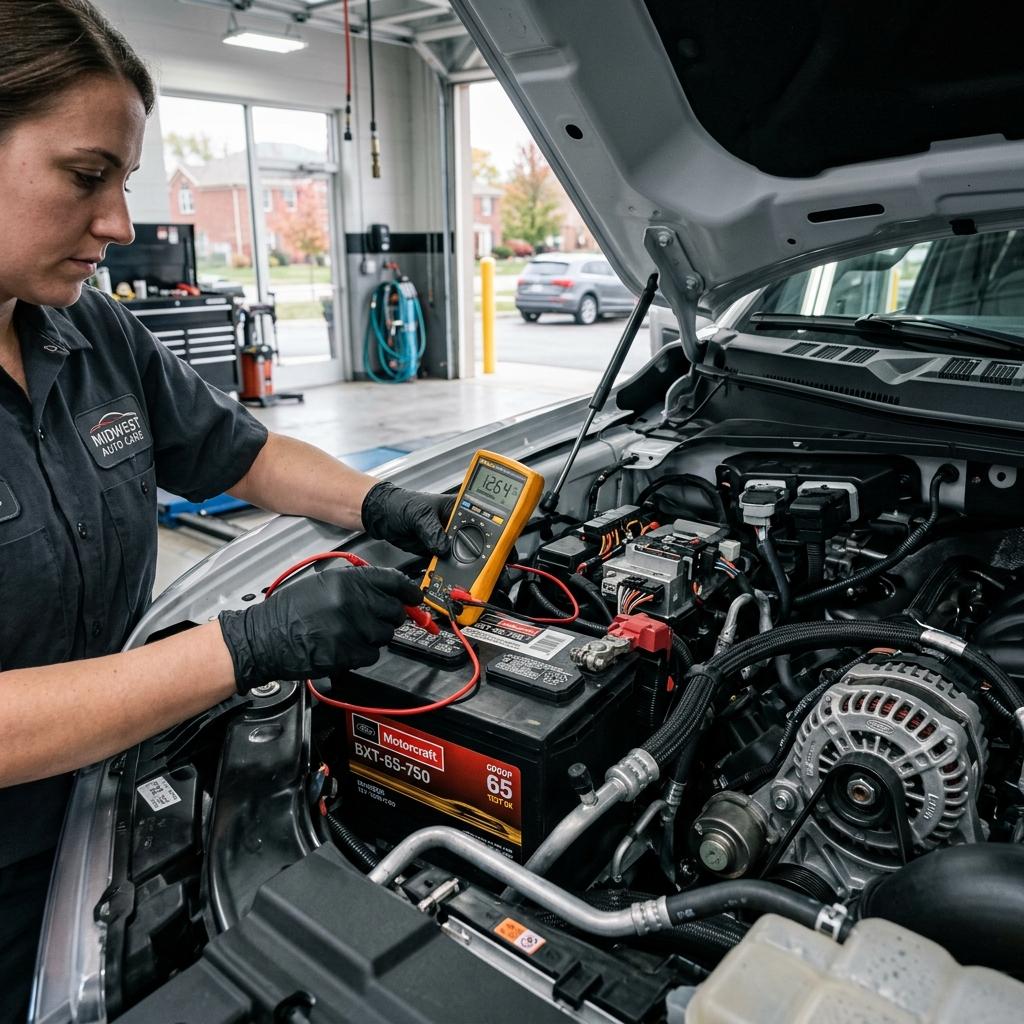
A swollen, cracked, leaking or strongly smelling car battery should be treated as a potential safety hazard. Do not attempt to charge, jump-start, open or handle a visibly damaged battery. Keep people away from the area and arrange qualified assistance, following emergency guidance if there is smoke, fire or an immediate danger.
A rotten-egg smell can indicate a battery or charging-system problem, but smell alone cannot confirm the cause. Avoid sparks, flames and smoking near the battery. If you feel unwell or suspect hazardous fumes, move away to fresh air and contact emergency services where appropriate.
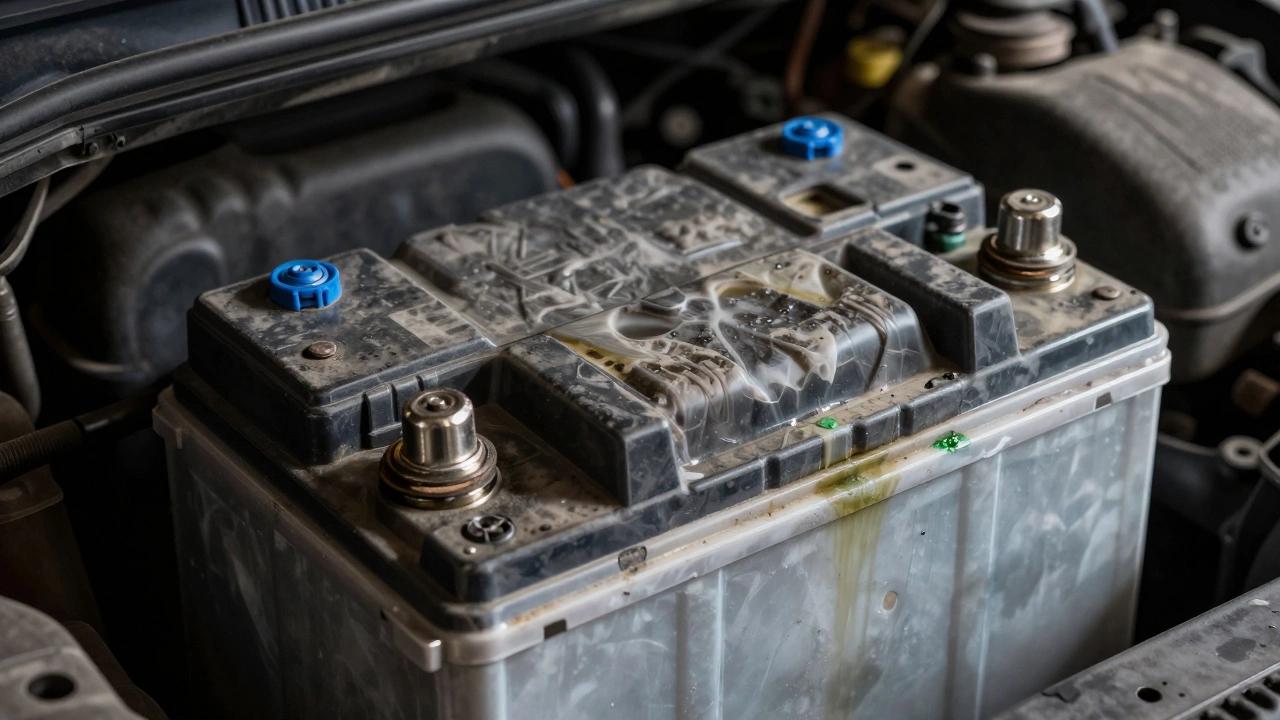
Which battery warning signs are serious?
| Warning sign | Why it matters | Safer response |
|---|---|---|
| Swollen or bulging battery case | May indicate overheating, overcharging, freezing or internal damage | Do not charge or jump-start; keep clear and arrange professional help |
| Cracked case or visible liquid leak | Battery electrolyte can be corrosive and cause injury or damage | Avoid contact and do not attempt removal yourself |
| Strong rotten-egg smell | May indicate a battery or charging-system fault and possible gas release | Move away from ignition sources and arrange assessment |
| Battery unusually hot, hissing or venting | May indicate a serious fault or unsafe operating condition | Keep clear, avoid sparks and seek urgent qualified assistance |
| Heavy corrosion around terminals | May interfere with electrical contact; deposits should not be handled casually | Arrange safe inspection and appropriate cleaning or replacement |
Why can a car battery swell or leak?
Possible causes include excessive heat, overcharging, freezing, physical damage, age or internal failure. The exact cause depends on the battery type and vehicle charging system. A damaged battery should not be treated as a routine flat-battery call-out because inspection and handling may require additional precautions.
Do not remove the caps, puncture the case, lean over the battery or try to neutralise a leak using household products. Do not disconnect or move a damaged battery unless a qualified professional or emergency responder directs you to do so.
What should you do immediately?
Stop trying to start, charge or jump-start the vehicle.
Keep flames, cigarettes, sparks and other ignition sources away from the battery area.
Avoid touching leaked liquid, corrosion deposits or damaged battery components.
Keep children and pets away and do not lean over the battery to inspect it.
Arrange qualified assistance and clearly describe the swelling, leak, smell, heat or noise before anyone attends.
If there is fire, smoke, an intense reaction or an immediate threat to people, move to a safe distance and contact emergency services. Do not attempt to manage a serious battery incident yourself.
Is corrosion the same as a leaking battery?
Not necessarily. A powdery deposit around terminals can be corrosion, while visible liquid, a cracked case or wet areas may indicate leakage or another issue. Appearance alone is not enough to identify the substance safely. Avoid touching deposits or wiping them with bare hands; have the battery and connections inspected appropriately.
| What you see | What it could indicate | What to avoid |
|---|---|---|
| White or bluish deposits at terminals | Terminal corrosion or residue | Do not brush or scrape it with bare hands or without suitable precautions |
| Wet patches or liquid on the battery case | Possible leak or fluid from another source | Do not touch, smell closely or attempt an improvised clean-up |
| Cracks or bulging in the casing | Physical or internal battery damage | Do not charge, jump-start or continue handling it |
| Smell with heat or hissing | Possible active fault requiring urgent assessment | Keep clear and remove ignition sources only if safe to do so |
Can you still drive with a damaged battery?
Do not assume the vehicle is safe to drive if the battery is swollen, leaking, unusually hot or producing a strong smell. Do not attempt to start the engine just to move it. Keep clear and seek professional advice on the safest next step. If the battery appears normal but the vehicle has a warning light, read our guide to battery warning lights while driving.
What happens during professional assessment?
A qualified technician can assess whether the battery is safe to handle, identify the appropriate removal and disposal procedure, and check whether the charging system or connections may have contributed to the failure. The correct approach depends on the battery type, vehicle design and condition. Do not request or attempt a routine jump-start without disclosing visible damage or a strong smell.
| Assessment area | Purpose |
|---|---|
| Visual condition and battery type | Identify visible damage and handling requirements |
| Charging system, where safe | Investigate possible overcharging or charging faults |
| Terminals and wiring | Assess connection condition and related damage |
| Replacement and recycling plan | Ensure the battery is replaced with a suitable type and disposed of appropriately |
Battery assistance in Melbourne West
Before booking, tell Car Battery Service if the battery is swollen, leaking, unusually hot or giving off a strong smell. Do not describe it simply as a flat battery, because the condition may change how the job needs to be handled. Depending on the vehicle, location and availability, the team can discuss battery replacement, battery testing when safe, and the appropriate next step.
Check our service areas or request a service. Call +61 467 037 886 or email mechanicnearyoubatteries@gmail.com and describe the warning signs before arranging attendance.
Frequently asked questions
Is a swollen car battery dangerous?
It can be. Swelling may indicate heat, overcharging, freezing or internal damage. Do not charge or jump-start it; keep clear and arrange qualified assistance.
What does a rotten-egg smell from a car battery mean?
It can indicate a battery or charging-system problem and possible gas release, but the smell alone does not confirm the cause. Avoid ignition sources, move away if fumes are present and seek qualified help.
Can I jump-start a leaking battery?
No. Do not jump-start or charge a leaking, cracked, swollen, frozen or visibly damaged battery. Avoid contact with any liquid and arrange safe professional assistance.
Is white powder on battery terminals a leak?
Not necessarily. It may be corrosion or residue, but appearance alone cannot confirm the substance. Avoid touching it and have the battery and connections inspected safely.
Should I remove a damaged battery myself?
No, not if it is swollen, leaking, unusually hot, hissing or giving off a strong smell. Keep clear and arrange qualified assistance; follow emergency guidance if there is immediate danger.
Can a faulty alternator cause battery problems?
A charging-system fault can contribute to battery damage or repeated discharge. A technician can assess the system when it is safe to do so.
Final takeaway
A swollen, leaking, hot or strongly smelling battery is not a routine jump-start situation. Stop attempts to start or charge it, avoid contact and ignition sources, and tell the service provider exactly what you have noticed so safe handling can be planned.
This article is general safety information, not an emergency response or vehicle-specific diagnosis. Move away from immediate danger and contact emergency services when appropriate.